
Surfer’s Eye (Pterygium): Why SoCal Eyes Are at Higher Risk

A pterygium (often called surfer’s eye) is a fleshy, pink growth on the white of the eye that is strongly linked to sunlight and outdoor time. Sunny, coastal, active lifestyles like those in Southern California increase the risk. Many people only need lubricating or anti-inflammatory drops. When a pterygium affects vision or comfort, surgery with […]
Toric Lenses: Correcting Astigmatism During Cataract Surgery
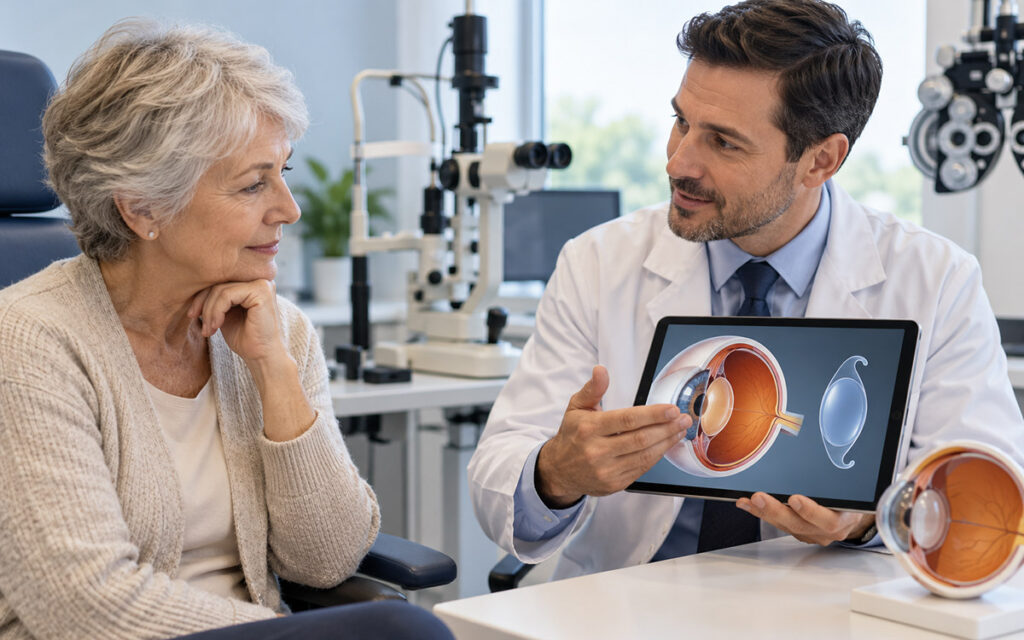
A toric lens is a special lens implant that corrects astigmatism during cataract surgery. It’s designed to reduce blur caused by an unevenly shaped cornea, so many patients see more clearly at a distance without glasses. Medicare typically covers the standard part of cataract surgery, while the extra cost of a toric lens is usually […]
Eye Floaters and Flashes: When to Worry and When to Wait

Eye floaters and flashes are very common, especially after age 50 or in nearsighted people. Most floaters come from normal age-related changes in the gel inside the eye and fade over time. However, a sudden shower of new floaters, repeated flashes, a shadow in your side vision, or a gray curtain over part of your […]
Dry vs. Wet Macular Degeneration: What’s the Difference?
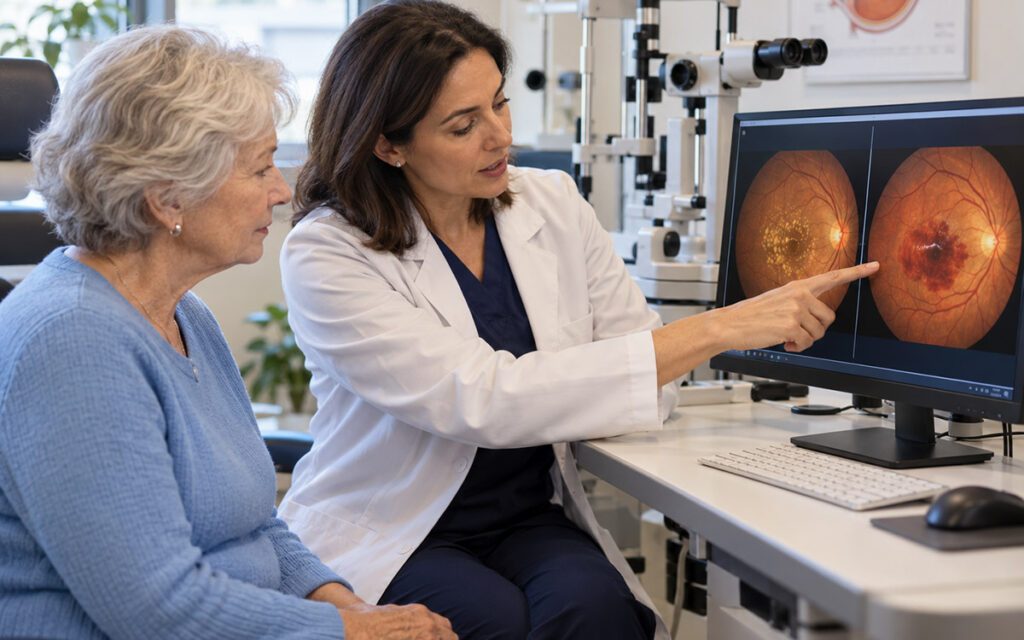
Age-related macular degeneration (AMD) comes in two forms. Dry AMD is far more common, making up about 85% of cases, and usually progresses slowly. Wet AMD accounts for about 15% but can cause faster, more serious vision loss because abnormal blood vessels leak under the retina. Both affect central vision, not side vision. Treatments differ: […]
Blurry Again After Cataract Surgery? What Secondary Cataract Means
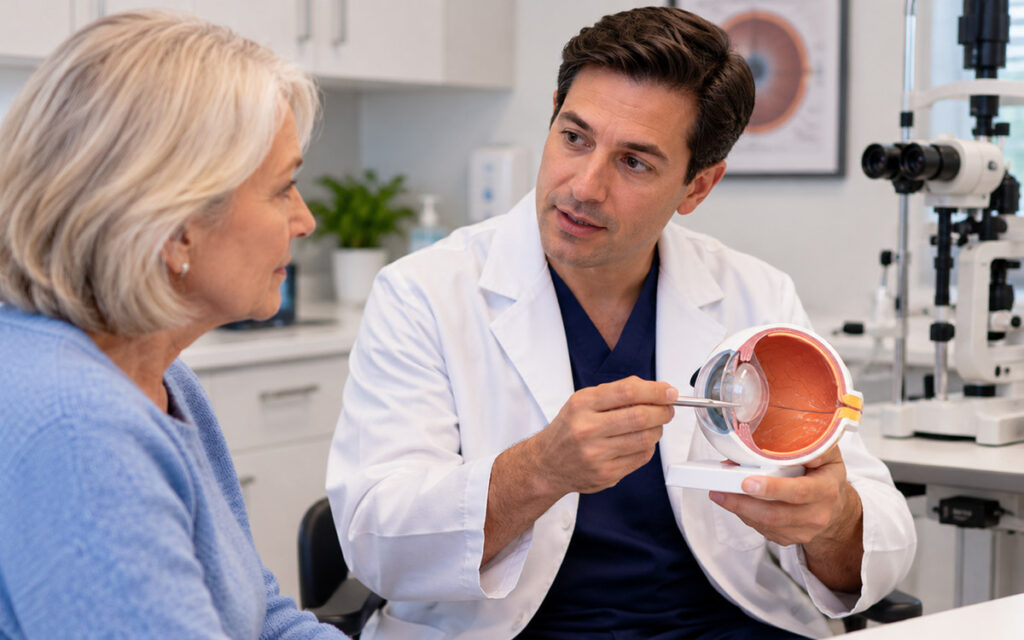
A secondary cataract is not your cataract returning. It happens when the thin, clear capsule that holds your new lens implant turns cloudy over time. Symptoms look a lot like the original cataract: blur, glare, and halos. The fix is a quick, painless in-office laser treatment called YAG laser capsulotomy. Most people notice clearer vision […]
What to Expect at Your First Visit to Anaheim Eye Institute
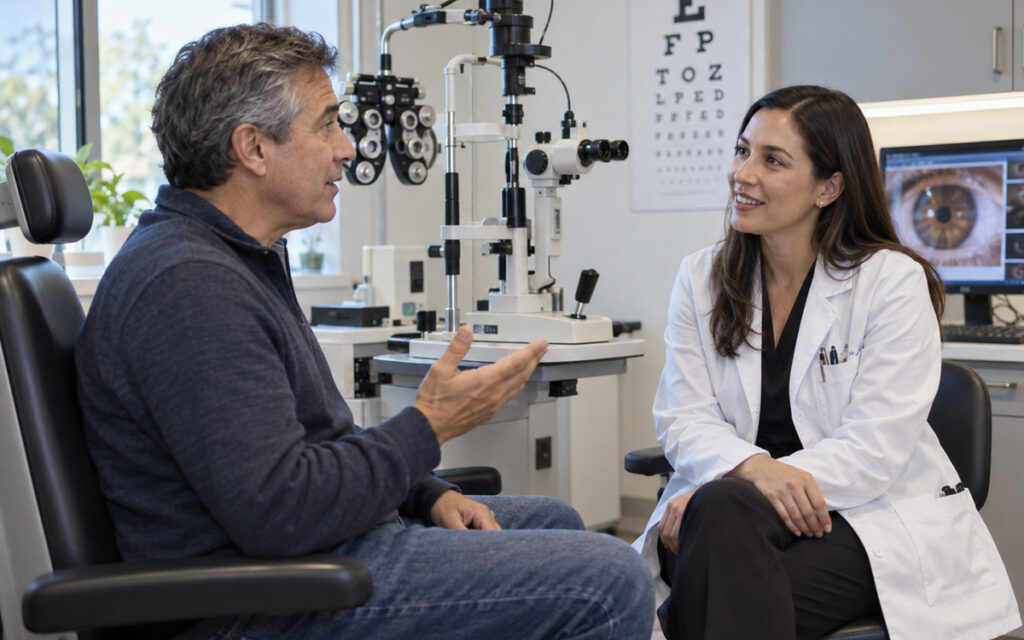
Your first visit to Anaheim Eye Institute typically takes 60 to 90 minutes and includes vision testing, eye pressure measurement, a slit lamp exam, and usually dilation. Bring your glasses, current medications, insurance card, and ideally a driver, since dilation blurs near vision and increases light sensitivity for several hours. Introduction You booked the appointment […]
Meet Dr. Neal: 40,000 Procedures and What Experience Means
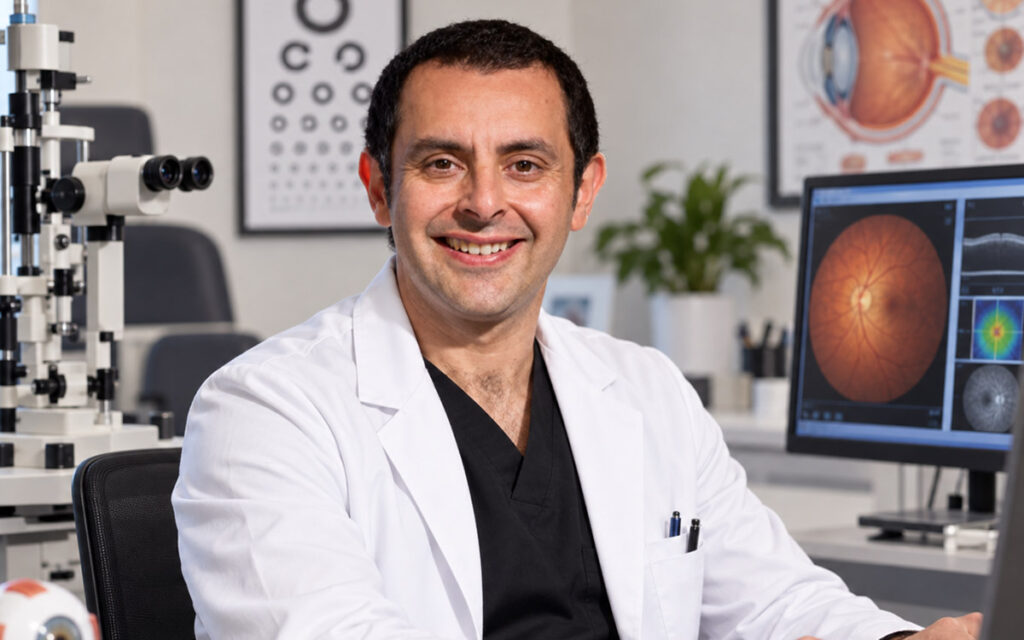
Dr. M. Reza Neal has served as medical director of the Anaheim Eye Institute since 2005 and has performed more than 40,000 surgical procedures. Research from a Swedish registry of 118,000 cataract surgeries found complication rates fall sharply as surgeon volume rises. This article explains his background and what his experience can and can not […]
Optometrist vs. Ophthalmologist: Which Do You Need?
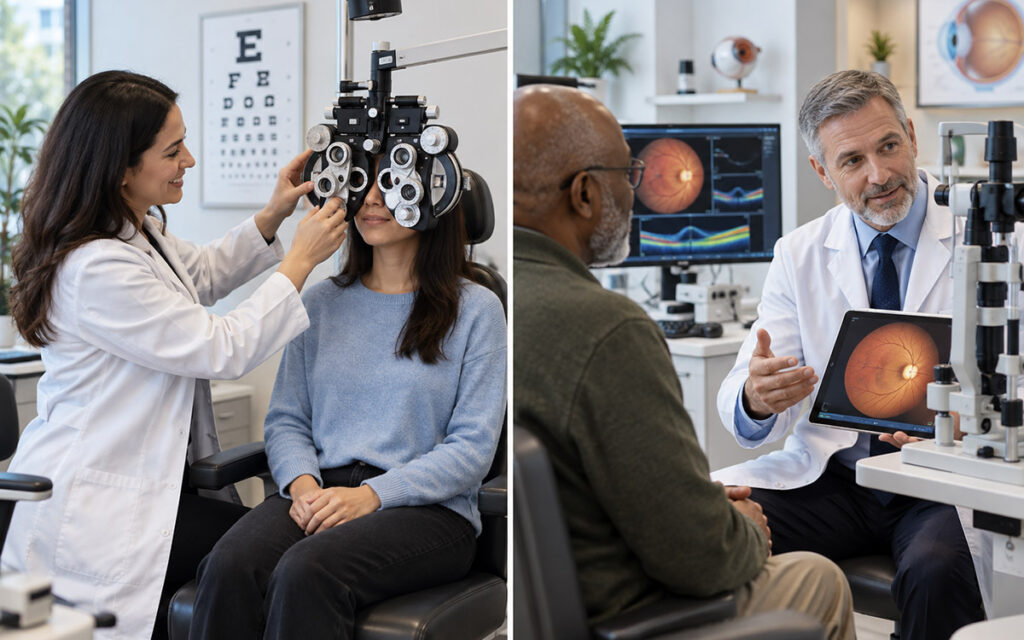
An optometrist holds a Doctor of Optometry degree and handles exams, prescriptions, and many routine eye conditions. An ophthalmologist is a medical doctor who completed residency and can perform eye surgery. For glasses and routine care, either may be appropriate. For cataracts, glaucoma surgery, or retinal disease, you need an ophthalmologist. You have a floater […]
Diabetic Retinopathy: Why Annual Eye Exams Are Critical
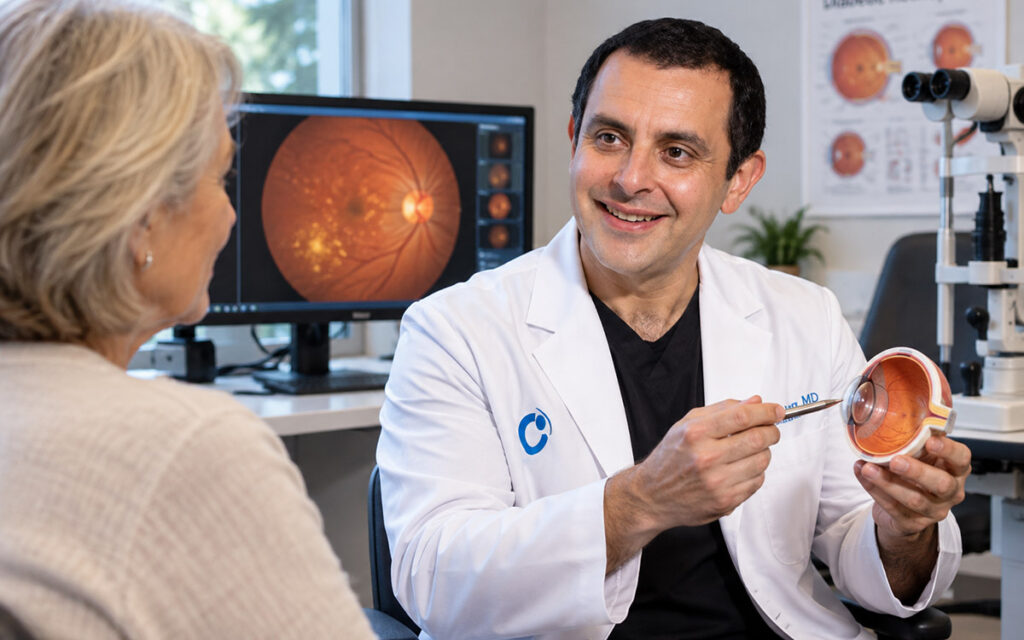
Diabetic retinopathy damages the blood vessels in the retina and is the leading cause of blindness in working-age adults. It usually causes no symptoms in its early, most treatable stages, which is why the CDC recommends annual dilated eye exams for everyone with diabetes, starting at diagnosis for type 2. Introduction Your last A1C was […]