Droopy eyelids usually come from extra skin, a stretched lifting muscle, or a mix of both. When a low lid starts cutting into your upper vision, an eye doctor can use a visual field test, photos, and lid measurements to document it as a medical problem rather than a cosmetic one. Treatment ranges from prescription eye drops for a temporary lift to ptosis surgery or blepharoplasty for a longer-lasting result.
The most common reason adults develop droopy eyelids is not an injury or illness. It is simple wear on the tendon that lifts the lid. Doctors call this aponeurotic, or age-related, ptosis, and according to NIH StatPearls it is the leading cause of acquired lid droop in adults. It tends to show up gradually, often in a person’s 50s and 60s.
Because it creeps in slowly, many people only notice it in a tired-looking photo. That raises a fair question: is this just aging, or something that deserves medical attention?
At Anaheim Eye Institute, Orange County’s first multi-specialty ophthalmology practice, we have been helping patients answer questions like these since 1958. The honest answer depends on how the lid affects your sight.
Why Droopy Eyelids Happen
Droopy eyelids happen for two main reasons. Either the eyelid skin has stretched and folds down over the lashes, or the muscle and tendon that lift the lid have weakened or loosened. Many adults have some of both, and telling them apart is the first step toward the right treatment.
Excess Skin vs. a Stretched Muscle
When the problem is extra skin, the condition is called dermatochalasis. Eyelid skin loses elasticity and can hang in a hood over the crease, while the lid edge underneath may sit normally.
Ptosis is different. The AAO’s EyeWiki entry on blepharoptosis describes it as a lid margin that sits lower than it should, usually because the levator muscle or its tendon has stretched or detached. In plain terms, the skin may look fine, but the lid simply doesn’t lift as high as it used to.
When It Is Both
Plenty of patients have both. Removing skin alone won’t raise a lid with a loosened muscle, and tightening the muscle won’t clear a heavy hood of skin.
That’s why a careful exam comes first. The position of the lid edge, the amount of skin that folds over it, and the muscle’s movement all determine whether surgery will focus on the muscle, the skin, or both.
Other Causes of Ptosis Worth Ruling Out
Age is the usual culprit, but not the only one.
Long-Term Contact Lens Wear, Surgery, and Injury
Years of wearing contact lenses, especially rigid lenses, can gradually stretch the lifting tendon as the lid is pulled during insertion and removal. Prior eye surgery, including cataract surgery, can also loosen the tendon in some people. Trauma to the brow or eyelid area is another known cause.
These forms tend to develop slowly and are usually evaluated much like age-related droop.
When a Droop Is a Warning Sign
A small number of cases point to something beyond the eyelid itself. StatPearls notes that a droop appearing suddenly, especially with double vision, a severe headache, or pupils of different sizes, can be connected to a nerve problem. A droop that gets worse as the day goes on, or with fatigue, may suggest a neuromuscular condition such as myasthenia gravis.
If you notice any of these symptoms, seek prompt medical care rather than waiting for a routine visit.
Droopy Eyelids Blocking Vision: The Medical vs. Cosmetic Line
Droopy eyelids become a medical concern when the lid or skin physically blocks part of your upper vision or forces you to strain to see. When the change is mainly about appearance, it is considered cosmetic. Both are valid reasons to see a specialist, but they follow different pathways for evaluation and coverage.
Everyday Signs It Is Functional
The clues show up in daily habits: tilting the chin up to see, constantly raised eyebrows, forehead fatigue by evening, harder reading or driving, or lifting a lid with a finger to see better.
The AAO’s Ophthalmic Technology Assessment on functional eyelid surgery found that measurable signs such as a lid edge sitting 2 millimeters or less from the center of the pupil, loss of upper vision, and a compensating chin-up posture were reliable markers of a functional problem. The same review reported that repairing these lids can improve both vision and quality of life.
Cosmetic Concerns Are Valid Too
Not every droop affects sight. Many people simply want to look less tired or even out lids that sit at different heights, and those goals are worth discussing too.
The difference is practical: cosmetic procedures are generally out of pocket, while functional ones may qualify for insurance review with the right documentation.
How Visual Field Testing Shows the Difference
A visual field test is how an eye doctor turns “I can’t see well over my lids” into measurable data. The test maps how far up you can see with your lids in their natural position and again with them lifted. The gap between the two results shows how much vision the lids are taking away.
Taped vs. Untaped Testing
You look at a central target and signal each time a small light appears around your field of view. The first round is done with the lids at rest, then the lids are gently taped, and the test is repeated.
Comparing the two maps is the key. One Medicare contractor’s blepharoplasty documentation checklist from CGS looks for a meaningful loss in the upper field, such as 12 degrees or 30 percent, that improves when the lid is taped. Other plans set their own criteria, so requirements can vary.
Photos and Lid Measurements
Along with the field test, an eye doctor may take front-facing photos and measure a value called MRD1. That’s the distance from the center of the pupil to the edge of the upper lid, and a smaller number means a lower lid. Notes about your symptoms, such as trouble reading or driving, are also part of the record.
Insurers typically review this entire picture, and no eye doctor can guarantee how a plan will respond.
A droopy eyelid stops being only cosmetic the moment it starts shrinking what you can see.
Droopy Eyelid Treatment Options
Droopy eyelid treatment depends on the cause. A prescription eye drop can give certain types of ptosis a temporary lift, while surgery to tighten the lifting muscle or remove extra skin offers a longer-lasting change. The best option depends on your exam findings and your goals.
Prescription Eye Drops
In 2020, the FDA approved oxymetazoline 0.1% eye drops for acquired ptosis in adults, as reported by Healio. The drop works on a small muscle in the lid called Müller’s muscle, causing it to contract and lift the lid slightly. EyeWiki notes the effect is modest and temporary, lasting several hours.
An eye doctor may suggest these drops for mild droop or for people not ready for surgery. They don’t remove extra skin and aren’t permanent.
Ptosis Surgery
For a stretched or detached tendon, the most common approach is to tighten or reattach it, often called levator advancement. Some surgeons instead work from the inside of the lid on Müller’s muscle for milder cases. When the lifting muscle is fragile, a sling procedure can connect the lid to the forehead muscle so the brow helps raise it.
The surgeon chooses based on how well your muscle works and how much lift is needed.
Blepharoplasty for Excess Skin
When extra skin is the main issue, upper eyelid blepharoplasty removes the hooding fold and can restore a clearer crease. It can be done on its own or combined with ptosis repair when both problems are present. You can learn more about functional and cosmetic eyelid care on our eyelids page.
What to Expect When You See an Eye Specialist
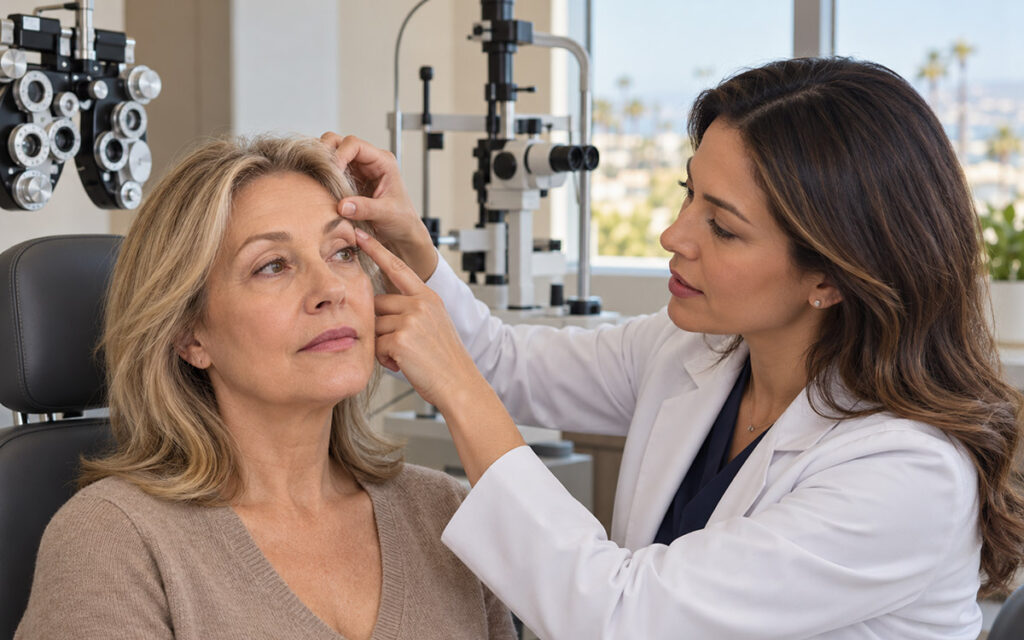
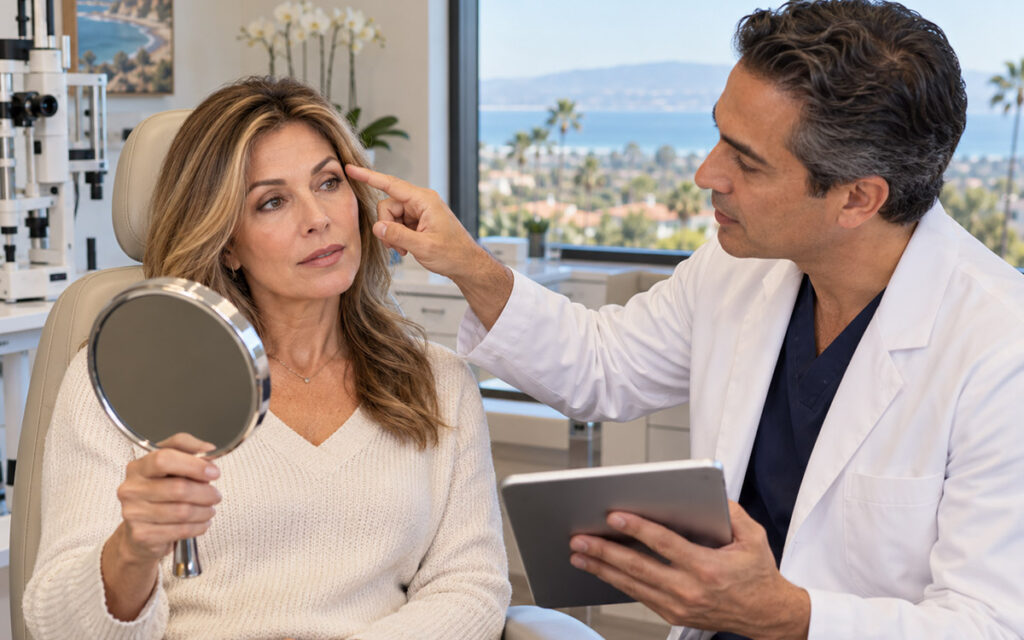
An evaluation for droopy eyelids is straightforward and usually painless: a conversation about symptoms, a detailed lid exam, and further testing if needed.
Your First Visit
Expect questions about when you first noticed the droop, whether it changes during the day, and how it affects activities like reading or driving. The exam looks at lid position, skin, and muscle strength, and if a functional problem seems likely, your eye doctor may order a visual field test. You can meet our oculoplastic specialist and the rest of our team before your appointment.
Heavy lids and early cataract changes can both dim vision for older adults, so looking at the full picture together is helpful.
Recovery in Broad Strokes
After eyelid surgery, swelling and bruising are common and usually settle over a few weeks. Healing timelines vary, your surgeon will give specific aftercare instructions, and results can’t be guaranteed.
Seeing Clearly Again Starts With the Right Question
Droopy eyelids are common, especially after 50, and they aren’t automatically a problem. The real question is whether they affect how well you see. A careful exam and, when needed, a visual field test can answer whether your lids are a medical concern or a cosmetic one.
A specialist can explain what’s causing the droop and which options fit you. Our contact page lists every way to reach us.
Have questions about your vision or ready to explore your options? The team at Anaheim Eye Institute has been helping Orange County patients see clearly since 1958.
Book an Appointment or call 714.533.2020.
This article is for general educational purposes and is not a substitute for professional medical advice. Please consult a qualified eye care provider about your individual symptoms and treatment options.
Frequently Asked Questions
What is the difference between ptosis and dermatochalasis?
Ptosis means the edge of the upper eyelid sits too low, usually because the muscle or tendon that lifts it has stretched or weakened. Dermatochalasis means extra eyelid skin hangs over the crease while the lid edge may be in a normal spot. Many adults have both, which is why a specialist exam matters.
Will insurance cover droopy eyelid surgery?
Insurance may cover eyelid surgery when it is considered medically necessary, meaning the lids measurably block your vision. Plans usually look for documentation such as visual field testing, photos, and notes about your symptoms. Purely cosmetic procedures are generally not covered, and each plan sets its criteria.
How do I know if my droopy eyelids are blocking my vision?
Common signs include tilting your chin up to see, raising your brows constantly, forehead fatigue, and lifting your lids with a finger to see better. Only an eye exam can confirm whether your lids are affecting your sight. A visual field test can measure how much upper vision is lost.
Can eye drops fix droopy eyelids without surgery?
A prescription drop containing oxymetazoline 0.1% is FDA approved for acquired ptosis in adults and can lift the lid slightly for several hours. It is a temporary option that does not remove extra skin. An eye doctor can tell you whether drops are a reasonable fit for your type of droop.
When is a droopy eyelid an emergency?
A droop that appears suddenly, especially with double vision, a severe headache, or pupils of different sizes, needs immediate medical attention. A droop that worsens throughout the day or with fatigue also deserves a prompt evaluation. These symptoms can signal a nerve or neuromuscular problem rather than simple aging.