LASIK has helped millions of people reduce or eliminate their dependence on glasses and contact lenses, but one question still comes up more than any other: is it truly safe?
For patients in Anaheim considering vision correction surgery, safety is not just important; it is everything. Choosing to have a laser procedure on your eyes requires trust, education, and a clear understanding of risks and outcomes.
At Anaheim Eye Institute, patient safety is the foundation of every LASIK consultation and procedure. Modern LASIK is one of the most studied and refined elective surgeries performed today. But understanding what makes it safe and who qualifies as a strong candidate is key to making a confident decision.
Understanding How LASIK Works
LASIK, or Laser-Assisted In Situ Keratomileusis, reshapes the cornea to improve how light focuses on the retina. The procedure uses advanced laser technology to correct nearsightedness, farsightedness, and astigmatism.
The surgery itself typically takes only minutes per eye. Numbing drops are used, and most patients experience minimal discomfort. Because the cornea heals quickly, vision improvement often begins within 24 hours.
Modern LASIK systems use highly precise laser mapping and tracking technology, dramatically reducing human variability and improving accuracy.
How Safe Is LASIK Today?
LASIK has been performed for over 25 years and continues to evolve with improved technology and safety protocols. Numerous large-scale studies have demonstrated high patient satisfaction rates and low complication rates when performed on properly screened candidates.
Serious complications are rare. The most common temporary side effects include dry eye, glare, halos, and mild visual fluctuations during healing. These typically resolve within weeks to months.
The key factor in safety is not just the procedure itself but proper patient selection.
LASIK is safest when the right patient is matched with the right technology and a thorough pre-surgical evaluation.
Who Is a Good Candidate for LASIK?
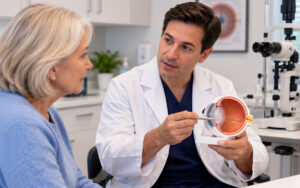
Safety begins long before surgery. A comprehensive eye exam determines whether LASIK is appropriate.
Ideal candidates generally:
- Are over 18 with stable prescriptions
- Have healthy corneas with adequate thickness
- Do not have advanced dry eye disease
- Are free of certain eye diseases such as uncontrolled glaucoma
Patients with thin corneas, unstable prescriptions, or certain corneal conditions may not be ideal LASIK candidates. In those cases, alternative procedures such as PRK or Refractive Lens Exchange may be recommended.
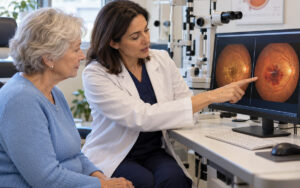
At Anaheim Eye Institute, advanced diagnostic imaging evaluates corneal shape, thickness, tear film stability, and overall ocular health before any procedure is scheduled.
What Risks Should Patients Understand?
No surgical procedure is entirely risk-free. While LASIK has an excellent safety record, patients should understand potential risks.
Temporary side effects may include:
- Dry eye
- Night glare or halos
- Light sensitivity
- Mild visual fluctuation
Serious complications are uncommon, especially with modern technology and experienced surgeons. Enhancement procedures are occasionally needed if minor prescription adjustments remain after healing.
Open discussion during consultation ensures expectations are realistic and informed.
Technology and Safety in Anaheim
Technology plays a major role in LASIK safety. Modern femtosecond lasers create precise corneal flaps, while excimer lasers reshape the cornea with micron-level accuracy. Advanced eye-tracking systems follow even small eye movements during treatment.
These technological advancements have significantly reduced complication rates compared to earlier generations of LASIK.
Choosing a reputable, experienced center in Anaheim with advanced diagnostic equipment improves both safety and outcomes.
What About Long-Term Safety?
Long-term studies show LASIK results remain stable for many patients. Age-related changes such as presbyopia or cataracts can still occur later in life, but these are natural aging processes, not LASIK complications.
LASIK does not increase the risk of cataracts or retinal disease. Regular eye exams remain important after surgery to monitor overall eye health.
FAQs About LASIK Safety
Is LASIK painful?
Most patients report minimal discomfort. Numbing drops are used during the procedure.
Can LASIK cause blindness?
Severe complications are extremely rare when surgery is performed by experienced ophthalmologists using modern technology.
How long is recovery?
Most patients return to normal activities within a day or two, with vision stabilizing over several weeks.
What if my vision changes later?
Enhancement procedures may be possible if appropriate.
Is LASIK safe for everyone?
No. Proper screening determines candidacy to ensure safety.
Making a Confident Decision
For Anaheim patients exploring LASIK, safety depends on education, screening, and surgeon experience. When performed on appropriate candidates using advanced technology, LASIK is considered one of the safest elective procedures available today.
At Anaheim Eye Institute, the goal is not to convince every patient to have LASIK but to determine whether it is the right and safest choice for your individual vision needs.
If you are considering LASIK surgery in Anaheim, schedule a comprehensive consultation to evaluate your candidacy and discuss personalized options for clearer vision.