How true eye care goes far beyond correcting what you can see.
For many people, eye care begins and ends with one question:
“Do I need new glasses?”
While corrective lenses play an important role in daily comfort, they represent only a small part of what it means to protect vision.
At the Anaheim Eye Institute, patients often arrive focused solely on sharper sight. What they leave with is a more profound understanding that eye health is a medical issue, not just an optical one.
As one physician explains to patients:
“Glasses improve vision. They do not protect the eyes.”
True eye care involves preserving delicate tissues, monitoring silent disease, and preventing damage long before symptoms appear.
Glasses Correct Focus, Not Eye Health
Glasses and contact lenses are designed to correct refractive errors such as:
- Nearsightedness
- Farsightedness
- Astigmatism
- Presbyopia
They help images land sharply on the retina.
But they do not address what is happening inside the eye.
They do not detect:
- Rising eye pressure
- Retinal thinning
- Blood vessel damage
- Early cataract formation
- Optic nerve deterioration
A patient can see clearly while disease progresses quietly beneath the surface.
This is one of the most common misconceptions in eye care.
The Eye Is a Living Organ System
The eyes are complex biological structures made of fragile tissues, microscopic blood vessels, and highly specialized nerve cells.
They respond to:
- Blood sugar levels
- Blood pressure
- Hormonal changes
- Autoimmune conditions
- Inflammation
- Environmental exposure
Conditions like diabetes, hypertension, and thyroid disease often show early warning signs in the eyes.
At Anaheim Eye Institute, eye exams are frequently the first place systemic illness becomes visible.
“The eyes often reveal what the rest of the body hides.”
Silent Diseases That Glasses Cannot Detect
Several serious eye diseases develop without early symptoms.
Glaucoma
Gradual damage to the optic nerve leads to a narrowing of peripheral vision. Central vision often remains normal until late stages.
Macular Degeneration
Progressive damage to the central retina that affects reading and facial recognition.
Diabetic Retinopathy
Blood vessel leakage and swelling inside the retina caused by long-term diabetes.
Cataracts
Clouding of the natural lens that reduces contrast and clarity.
None of these conditions are corrected by stronger prescriptions.
Without medical exams, they can progress undetected for years.
Dry Eye Disease Is a Medical Condition
Dry eyes are often dismissed as minor discomfort.
In reality, chronic dry eye is an inflammatory disease that damages the eye’s surface and destabilizes vision.
Patients experience:
- Burning
- Grittiness
- Redness
- Fluctuating clarity
- Light sensitivity
Treating dry eye requires medical evaluation and targeted therapy, not just artificial tears or new lenses.
At Anaheim Eye Institute, dry eye management often becomes the key to restoring consistent visual comfort.
Eye Exams Are Preventive Medicine
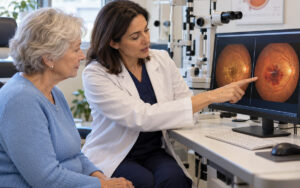
A comprehensive eye exam is closer to a full medical screening than a vision check.
It evaluates:
- Corneal integrity
- Lens clarity
- Retinal structure
- Optic nerve health
- Eye pressure
- Blood vessel condition
- Visual fields
Advanced imaging allows doctors to detect microscopic changes years before symptoms appear.
This transforms eye care into prevention rather than reaction.
Why Patients Delay Care
Many patients postpone exams because:
- Vision seems “good enough.”
- No pain is present
- Glasses still work
- Busy schedules
Unfortunately, eye diseases rarely cause discomfort in early stages.
Waiting for symptoms often means waiting for permanent damage.
Children and Eye Health
Eye health is equally critical in children.
Undetected vision problems can affect:
- Learning
- Reading speed
- Concentration
- Athletic performance
- Confidence
Routine pediatric eye exams identify amblyopia, focusing disorders, and eye alignment problems early, when treatment is most effective.
Long Term Vision Requires Medical Care
Protecting eyesight over decades requires more than updating prescriptions.
It requires:
- Regular monitoring
- Early disease detection
- Medical treatment
- Lifestyle guidance
- Surgical care when appropriate
At the Anaheim Eye Institute, vision correction is only one part of a much larger commitment to preserving lifelong sight.
Final Thoughts: Glasses Are Tools, Not Protection
Glasses improve how clearly you see today.
Medical eye care protects how well you will see in ten, twenty, or thirty years.
The difference matters.
If your last eye exam focused only on reading letters, it may be time for a deeper evaluation.
Schedule a comprehensive medical eye exam with Anaheim Eye Institute and take an active role in preserving your long term vision health.