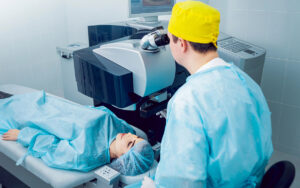
Understanding who qualifies for LASIK and how modern laser vision correction can transform everyday life.
For many people who rely on glasses or contact lenses every day, the idea of waking up with clear vision feels life-changing. LASIK eye surgery has helped millions of patients reduce or eliminate their dependence on corrective lenses, making it one of the most popular elective medical procedures in the world. Thanks to major advances in laser technology and surgical precision, LASIK has become safer, more predictable, and more customized than ever before.
However, not everyone is automatically a candidate for LASIK. The procedure works best for individuals whose eyes meet specific health and vision criteria, such as having a stable prescription, sufficient corneal thickness, and no history of certain eye conditions. A thorough evaluation by an experienced ophthalmologist is essential to determine whether LASIK is the right option for your eyes.
At Anaheim Eye Institute, patients receive advanced diagnostic testing and personalized consultations to determine whether LASIK is the safest and most effective solution for their vision needs.
Clear vision without glasses or contacts can be life-changing, but the key to successful LASIK is ensuring that the procedure is right for your eyes.
Understanding the characteristics that make someone a good candidate for LASIK can help you determine whether it may be worth exploring during your next eye examination.
Understanding How LASIK Works
LASIK, short for laser-assisted in situ keratomileusis, is a type of refractive surgery designed to reshape the cornea, the clear front surface of the eye. The cornea plays a crucial role in focusing light onto the retina, which allows us to see clearly.
When the cornea has an irregular shape, light does not focus properly on the retina. This results in refractive errors such as nearsightedness, farsightedness, or astigmatism.
During LASIK surgery, a specialized laser reshapes the corneal tissue with extreme precision. This adjustment allows light entering the eye to focus more accurately on the retina, improving vision clarity.
The entire procedure typically takes about 15 minutes for both eyes. Most patients notice improved vision within a day, and many achieve 20/20 vision or better depending on their individual circumstances.
Modern LASIK procedures use advanced mapping technologies that create a highly detailed profile of the eye, allowing surgeons to customize treatment for each patient’s unique vision characteristics.
Vision Conditions LASIK Can Correct
LASIK is designed to treat the most common refractive errors affecting millions of people.
Nearsightedness, also called myopia, occurs when distant objects appear blurry while close objects remain clear. LASIK corrects this by flattening the cornea slightly to improve how light focuses in the eye.
Farsightedness, or hyperopia, causes nearby objects to appear blurry. LASIK corrects this condition by adjusting the corneal curvature so that light focuses correctly on the retina.
Astigmatism results from an uneven curvature of the cornea. This irregular shape causes distorted or blurry vision at multiple distances. LASIK smooths and reshapes the cornea to create a more uniform surface.
In many cases, patients have a combination of these conditions, such as astigmatism and myopia, which LASIK can address simultaneously, leading to improved overall vision quality.
Key Requirements for LASIK Candidates
Several important factors determine whether someone is a good candidate for LASIK eye surgery.
Age is one of the first considerations. Patients must generally be at least 18 years old, though many surgeons prefer candidates to be in their early twenties or older to ensure their vision has stabilized.
Stable vision is another essential factor. If a prescription for corrective lenses has changed significantly within the past year, it may be better to wait before considering LASIK, which is a laser eye surgery that corrects vision.
Healthy eyes are critical for successful outcomes. Patients should not have active eye infections, severe dry eye syndrome, or untreated eye diseases.
Corneal thickness also plays a major role in LASIK eligibility. Because the procedure reshapes the cornea, there must be enough corneal tissue to safely perform the treatment.
At Anaheim Eye Institute, advanced imaging technology measures corneal thickness and maps the surface of the eye in extraordinary detail, helping ophthalmologists determine whether LASIK can be performed safely.
Lifestyle Factors That Make LASIK Appealing
Many patients pursue LASIK because of the freedom it offers in everyday life. People with active lifestyles often find glasses and contact lenses inconvenient or restrictive.
Athletes frequently choose LASIK because it eliminates concerns about broken glasses or contact lenses falling out during sports. Swimmers, runners, and outdoor enthusiasts often appreciate the convenience of clear vision without corrective eyewear.
Professionals whose careers rely on visual precision, such as pilots, photographers, and medical professionals, may also benefit from improved visual clarity.
Even simple daily routines can become easier. Activities such as driving at night, traveling, or waking up in the morning without reaching for glasses can significantly improve quality of life.
The best LASIK candidates are individuals who want greater freedom from glasses and contacts while maintaining healthy, stable vision.
When LASIK May Not Be the Best Option
While LASIK is highly effective for many patients, it is not always the best solution for everyone.
Certain eye conditions can make LASIK less suitable. For example, individuals with keratoconus, a progressive thinning of the cornea, may require alternative treatments.
Patients with severe dry eye symptoms may also need treatment before LASIK can be considered.
Pregnancy and breastfeeding can temporarily affect vision stability due to hormonal changes, so LASIK is typically postponed during this time.
Additionally, some individuals have prescriptions that fall outside the safe treatment range for LASIK.
Fortunately, modern ophthalmology offers alternative vision correction procedures. Options such as PRK (photorefractive keratectomy) or implantable lenses may still provide excellent vision improvement for patients who are not ideal LASIK candidates.
A comprehensive consultation helps determine the safest path forward.
What Happens During a LASIK Consultation
A LASIK consultation involves a series of detailed diagnostic tests that evaluate the health and structure of the eyes.
The ophthalmologist will measure the thickness of the cornea, analyze the shape of the eye, and evaluate how light travels through the visual system.
Advanced imaging systems create highly detailed maps of the cornea, identifying even subtle irregularities that could influence treatment planning.
The doctor will also review medical history, current medications, and lifestyle factors to determine whether LASIK is the best option.
If LASIK is appropriate, the surgeon will explain the procedure, expected results, and recovery timeline. Patients will also have an opportunity to ask questions and discuss their vision goals.
At Anaheim Eye Institute, consultations focus on patient education and safety, ensuring that every individual fully understands their options before making a decision.
Why Experience Matters in LASIK Surgery
Although LASIK technology has become highly advanced, the experience of the surgeon remains one of the most important factors in achieving excellent outcomes.
Experienced ophthalmologists understand how to interpret complex diagnostic data, customize treatments, and address individual variations in eye anatomy.
Modern LASIK systems rely on precise measurements and laser accuracy, but the surgeon’s judgment ensures that each procedure is tailored to the patient’s needs.
Choosing a reputable eye center with a strong track record in vision correction surgery can significantly influence results and long-term satisfaction.
Conclusion
LASIK eye surgery offers a remarkable opportunity to reduce dependence on glasses or contact lenses and experience clearer vision. For many patients, the procedure provides lasting visual improvement and greater convenience in everyday life.
However, the success of LASIK begins with determining whether a patient is a good candidate. Factors such as eye health, vision stability, corneal thickness, and lifestyle goals all play a role in identifying the right candidates for surgery.
If you are considering vision correction surgery, scheduling a consultation with an experienced ophthalmologist is the first step.
The specialists at Anaheim Eye Institute provide advanced diagnostic evaluations and personalized treatment plans designed to help patients achieve the clearest vision possible.
Schedule a consultation today to learn whether LASIK could be the right solution for your eyes and your lifestyle.
FAQs
How successful is LASIK eye surgery?
LASIK has a very high success rate, with studies showing that more than 90 percent of patients achieve 20/20 vision or better depending on their initial prescription.
Is LASIK painful?
The procedure is generally painless. Numbing eye drops are used before surgery, and most patients only feel mild pressure during the procedure.
How long do LASIK results last?
For most patients, LASIK results are permanent because the corneal reshaping does not reverse. However, natural age-related vision changes can still occur later in life.
Can both eyes be treated at the same time?
Yes. LASIK is typically performed on both eyes during the same visit, allowing patients to experience improved vision quickly.
How do I know if I qualify for LASIK?
A comprehensive eye examination and consultation with an experienced ophthalmologist is the best way to determine if LASIK is safe and appropriate for your eyes.