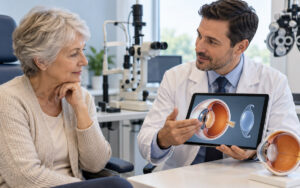
Why driving at night suddenly feels harder and what your eyes may be trying to tell you about changing vision.
Have you noticed headlights looking brighter than they used to? Do road signs seem harder to read at night, or does driving after sunset suddenly feel more stressful than it once did? If so, you are not imagining it.
Night vision problems are incredibly common and can affect people of all ages. While many individuals assume difficulty seeing at night is simply part of getting older, there are often underlying eye conditions or vision changes contributing to the problem.
Poor night vision, also known as nyctalopia, can range from mild difficulty adjusting to darkness to significant visual impairment in dim environments. In some cases, symptoms may signal common refractive issues, while in others they may point to more serious eye health concerns that deserve prompt attention.
Because Southern California drivers often spend long hours on busy freeways and roads after sunset, maintaining healthy night vision is especially important for both confidence and safety.
At Anaheim Eye Institute, comprehensive eye evaluations help patients identify what may be causing nighttime vision changes and determine the best path forward for clearer, more comfortable sight.
“If driving at night suddenly feels harder than it used to, your eyes may be signaling that something has changed.”
What Are Night Vision Problems?
Night vision problems occur when the eyes struggle to function properly in low-light or dim environments.
Most people notice symptoms while
- Driving at night
- Walking in poorly lit areas
- Entering dark rooms
- Watching movies in dark environments
- Adjusting between bright and dim lighting
While occasional difficulty seeing in darkness may not be unusual, persistent or worsening symptoms should not be ignored.
Night vision relies on multiple parts of the visual system working together, including the retina, pupil response, cornea, lens clarity, and the brain’s ability to process visual information in reduced lighting.
When any part of this process is disrupted, it can become more challenging to see clearly at night.
Common Symptoms of Night Vision Problems
Night vision difficulties can appear differently from person to person.
Some of the most common symptoms include:
Increased Glare From Headlights
Many patients say nighttime driving becomes frustrating because headlights appear overwhelmingly bright.
This glare may feel distracting, uncomfortable, or even temporarily blinding.
Halos Around Lights
Streetlights, brake lights, and headlights may appear surrounded by rings or glowing halos.
While some halos are harmless, persistent symptoms deserve evaluation.
Difficulty Seeing Road Signs
If signs suddenly seem harder to read until you are very close, changing vision may be contributing to the issue.
Poor Contrast Sensitivity
Objects may blend into darker surroundings, making it harder to judge distances or spot pedestrians, lane markings, or obstacles.
Slow Adjustment to Darkness
Some people notice their eyes take much longer to adapt after leaving a bright room or stepping outside at night.
Increased Eye Fatigue
Struggling to focus in low light can leave eyes feeling strained or tired more quickly.
“Many people assume poor night vision is normal aging, but often there is an underlying cause that can be diagnosed and treated.”
What Causes Night Vision Problems?
Several eye conditions and vision changes may contribute to worsening night vision.
Refractive Errors
One of the most common causes is an outdated glasses or contact lens prescription.
Conditions such as:
- Nearsightedness (myopia)
- Astigmatism
- Farsightedness
can all affect nighttime clarity. Astigmatism, in particular, often causes glare, halos, and blurry vision at night because light scatters unevenly inside the eye.
Sometimes, simply updating a prescription significantly improves nighttime driving confidence.
Cataracts
Cataracts are among the most common causes of worsening night vision, especially in adults over 60.
A cataract develops when the eye’s natural lens becomes cloudy.
This clouding scatters incoming light, creating symptoms such as:
- Glare from headlights
- Difficulty driving at night
- Blurry vision
- Reduced contrast sensitivity
- Faded colors
First, many people notice cataracts during nighttime driving long before daytime vision feels significantly affected.
Dry Eye Syndrome
Dry eyes may seem unrelated to night vision, but tear instability can greatly impact visual quality.
When the surface of the eye is not properly lubricated, incoming light scatters unevenly, worsening glare and blurry vision.
Southern California’s dry climate, heavy screen use, and allergies often make dry eye symptoms more common.
Vitamin A Deficiency
Although less common in developed countries, vitamin A plays a major role in retinal function and low-light vision.
Deficiencies may contribute to night blindness in some individuals.
Glaucoma
Certain glaucoma treatments or vision loss patterns may affect peripheral vision and nighttime visual performance.
Because glaucoma often develops silently, regular screenings remain important.
Retinal Conditions
The retina contains specialized cells responsible for helping us see in low light.
Certain retinal disorders may reduce nighttime vision and should be evaluated promptly.
Why Aging Often Affects Night Vision
Even healthy eyes naturally change with age.
As we grow older:
- Pupils may become smaller
- The lens becomes less flexible
- Light transmission decreases
- Contrast sensitivity declines
This means many adults naturally need brighter lighting than they once did.
However, dramatic or sudden changes should never simply be dismissed as aging.
A proper evaluation helps determine whether symptoms are age-related or linked to a treatable condition.
When Night Driving Starts Feeling Unsafe
Many people gradually avoid nighttime driving without fully realizing why.
You may notice yourself:
- Avoiding freeways at night
- Feeling anxious driving after sunset
- Struggling in rainy or low-visibility conditions
- Relying more heavily on GPS because signs are harder to read
- Becoming uncomfortable with glare from headlights
If nighttime driving begins affecting confidence or safety, scheduling an eye exam becomes especially important.
Small changes in vision can significantly impact reaction times and visual clarity behind the wheel.
How Night Vision Problems Are Diagnosed
At Anaheim Eye Institute, comprehensive eye exams help identify what may be contributing to worsening night vision.
Evaluations may include:
Prescription Testing
Even subtle prescription changes can impact nighttime visual clarity.
Cataract Evaluation
Doctors examine the lens for clouding that may worsen glare and visual quality.
Retinal Examination
The retina is assessed for underlying health concerns affecting low-light vision.
Dry Eye Assessment
Tear quality and ocular surface health are evaluated to identify dryness-related visual changes.
Glaucoma Screening
Eye pressure and optic nerve health may also be checked when appropriate.
The goal is to identify whether symptoms stem from a simple correction issue or a more significant medical condition.
Treatment Options for Poor Night Vision
Treatment depends entirely on the underlying cause.
Possible options may include:
Updated Glasses or Contact Lens Prescription
Many patients experience major improvements with updated corrective lenses.
Anti-reflective coatings on glasses may also reduce glare.
Cataract Surgery
If cataracts are contributing to symptoms, cataract surgery may dramatically improve nighttime clarity and driving confidence.
Dry Eye Treatment
Managing tear stability often improves visual sharpness and reduces glare.
Lifestyle Adjustments
Simple changes can help improve nighttime comfort, including:
- Keeping windshields clean
- Reducing dashboard brightness
- Wearing updated glasses
- Avoiding nighttime driving during eye strain or fatigue
Frequently Asked Questions
Is poor night vision normal with age?
Some decline is common, but worsening symptoms should still be evaluated to rule out cataracts or other eye conditions.
Why do headlights seem brighter at night?
Glare often increases due to cataracts, dry eyes, astigmatism, or prescription changes.
Can LASIK improve night vision?
For some patients, vision correction procedures may improve nighttime clarity, depending on the cause.
When should I worry about night vision problems?
If symptoms worsen, interfere with driving, or suddenly appear, an eye exam is recommended.
Can dry eyes affect night vision?
Yes. Tear instability may increase glare, halos, and blurry vision in low-light conditions.
Night vision problems can slowly creep into everyday life, making driving, reading signs, or simply moving through dim environments more difficult than before. The important thing to remember is that worsening night vision is not something you should simply accept without answers.
The experienced team at Anaheim Eye Institute can help identify the cause of nighttime vision changes and recommend personalized treatment options designed to improve clarity, comfort, and confidence. Schedule a comprehensive eye exam today and take the first step toward seeing more clearly, day and night.