What changes are normal, what is not, and how to protect your eyesight over time.
Most people accept that hair turns gray and joints become stiffer with age. Vision changes are often placed in the same category: expected and unavoidable.
While aging does affect the eyes, losing visual clarity is not something that should be dismissed or ignored. There is an important difference between natural changes and early disease, and recognizing that difference protects long-term sight.
At the Anaheim Eye Institute, many patients arrive believing their declining night vision or reading strain is simply part of growing older. In some cases, that is true. In others, it is the first sign of a condition that can be treated or managed when detected early.
As one specialist often tells patients:
“Aging changes the eyes, but it should not steal your independence.”
Understanding what happens to vision over time helps patients take control instead of accepting decline as inevitable.
How the Eyes Naturally Change With Age
Several normal structural changes occur gradually.
The lens becomes less flexible, making close-up work more difficult. This is known as presbyopia and usually begins in the early to mid-forties.
Tear production slows, which can lead to dryness, irritation, and fluctuating clarity.
The pupils become slightly smaller and respond more slowly to light changes, affecting night vision.
The lens also thickens and becomes less transparent over decades.
These shifts happen slowly, often unnoticed at first, and many can be managed comfortably with proper care.
When Normal Aging Turns Into Vision Loss
Some visual changes are not simply part of aging.
Cataracts, glaucoma, macular degeneration, and diabetic eye disease become more common later in life, but they are medical conditions, not unavoidable consequences of time.
Early cataracts reduce contrast before causing obvious blur.
Glaucoma damages peripheral vision silently.
Macular degeneration affects fine detail and reading ability.
Diabetic retinopathy alters blood vessels in the retina long before pain or redness appears.
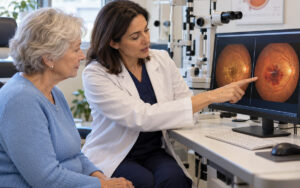
At the Anaheim Eye Institute, advanced imaging often reveals early disease in patients who believed their symptoms were age-related.
“Age opens the door, but disease is what walks through it.”
Why Vision Often Feels Worse at Night
Many older adults notice difficulty driving after dark.
Headlights appear harsh. Glare lingers. Road signs feel harder to read.
This effect is caused by several overlapping factors.
The aging lens scatters light more.
Pupil response slows.
Early cataract changes reduce contrast.
Dry eyes destabilize the visual surface.
Together, these create the impression of sudden vision decline when the change has actually been gradual.
Night vision complaints are one of the most common reasons patients seek evaluation at Anaheim Eye Institute.
Reading Fatigue Is a Signal, Not Just Inconvenience
Holding menus farther away, increasing phone font size, or feeling eye strain after short periods of reading are often dismissed as minor annoyances.
In reality, these symptoms reflect real changes in the focusing system.
Without proper evaluation, patients may overuse over-the-counter readers, worsening eye fatigue and headaches while underlying conditions remain untreated.
Professional assessment identifies whether symptoms stem from normal presbyopia, dry eye disease, early cataracts, or other issues.
Aging and the Brain’s Role in Vision
The eyes do not work alone.
The brain processes contrast, depth, and motion. With age, neural processing speed slows slightly.
These alterations can affect reaction time, reading speed, and adaptation to low-light environments.
When combined with eye disease, these changes increase fall risk, driving difficulty, and visual confusion.
Comprehensive eye care addresses both ocular health and functional vision quality.
Why Regular Exams Become More Important With Age
After 60, the risk of serious eye disease rises significantly.
Annual exams allow doctors to:
- Monitor subtle retinal changes
- Measure eye pressure trends
- Track lens clouding
- Detect early optic nerve damage
- Adjust treatment before vision loss occurs
At Anaheim Eye Institute, long-term monitoring is one of the most effective tools in preserving independence and quality of life.
Lifestyle Choices That Slow Visual Decline
Aging affects everyone, but its impact varies.
Protective habits include:
- Wearing UV-protective sunglasses
- Managing blood sugar and blood pressure
- Eating nutrient-rich foods
- Staying hydrated
- Taking screen breaks
- Avoiding smoking
- Following treatment plans for existing eye conditions
These steps reduce inflammation and vascular damage that accelerate vision loss.
Patient Reality
Many patients express the same thought after diagnosis.
“I wish I had come in sooner.”
Conditions detected early often require minimal intervention.
Those discovered late may involve surgery or permanent vision changes.
Timing shapes outcomes.
“Vision loss is harder to accept when you realize it was preventable.”
Final Thoughts: Aging Is Inevitable, Blindness Is Not
Time will change the eyes.
How those changes affect daily life depends on awareness and care.
At the Anaheim Eye Institute, the focus is not on stopping aging but on preventing unnecessary vision loss and maintaining clarity, comfort, and confidence for as long as possible. Growing older should mean collecting experiences, not surrendering sight.
If your vision has changed in subtle or frustrating ways, schedule a comprehensive eye exam with Anaheim Eye Institute.
Understanding whether changes are normal or medical is the first step toward protecting your long-term visual independence.